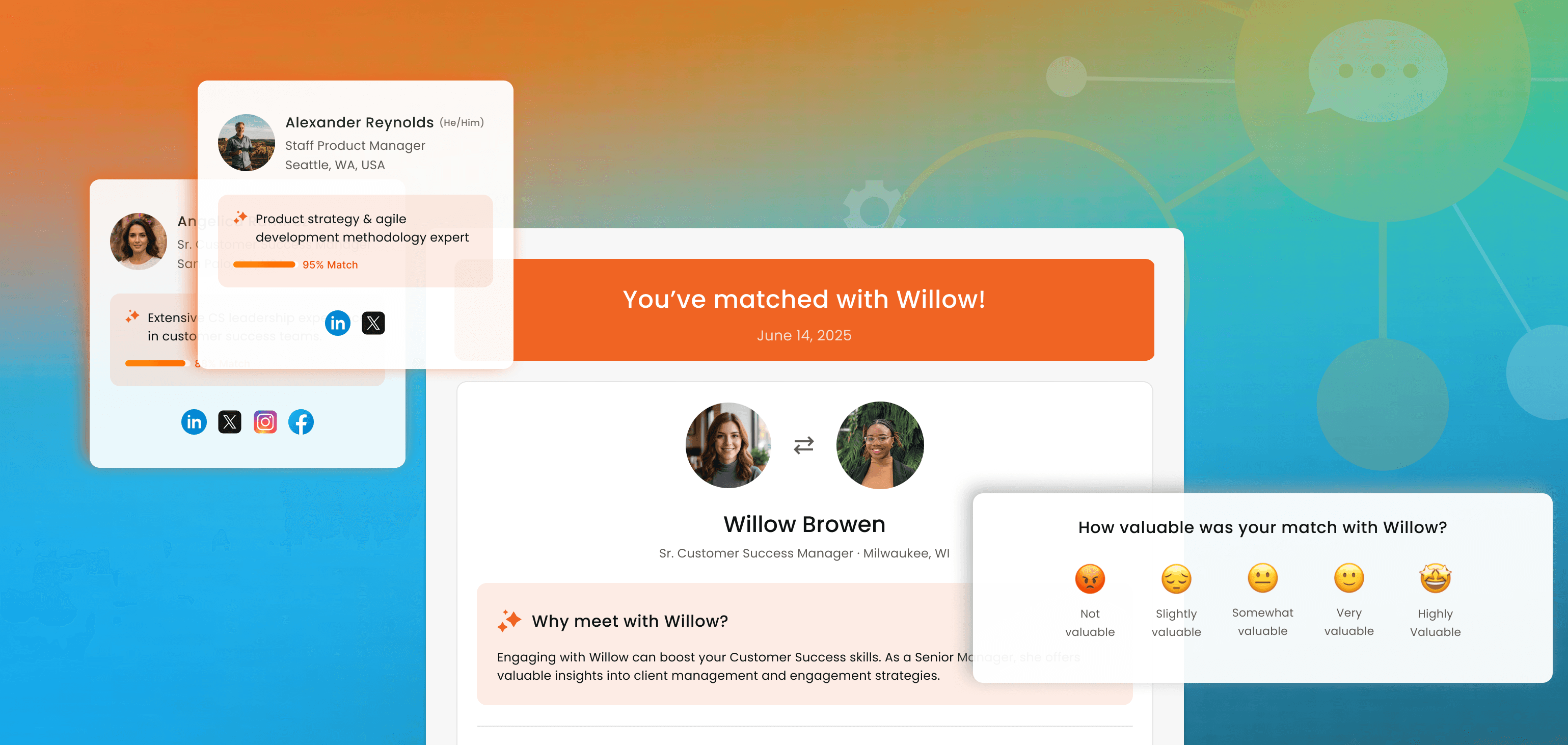
35% increase in matches that resulted in a meeting
Abode is an employee development platform used by enterprise organizations including Amazon, Uber, and PayPal.
After acquiring another company, we evaluated whether to migrate the existing networking experience to the new platform or rethink it entirely.
Rather than carry forward a broken model, we chose to rebuild networking from the ground up.
Led end-to-end design from problem definition → shipped product
B2B SaaS HR platform
Duration
2 months
Myself & two Software Engineers
The Problem
Only 2 out of 10 networking matches resulted in a meeting. Employees were passively assigned matches every few weeks with no context, no agency, and no clear reason to engage.
The Insight
The Solution
3 months post-launch
Constraints
Countless use cases
Networking needed to support a variety of clients and use cases (i.e., employees, students, alumni), each requiring different matching criteria and workflows.
Limited time & resources
With only 2 engineers and two months to build it, we had to cut scope and adapt the design for a quicker build.
AI restraints
By adding in AI elements, we also needed to incorporate layers of logic to create guardrails and reduce bias in the matching algorithm.
The Process
Research Methods
I drew from both qualitative and quantitative sources to try to uncover why user engagement was so low.
Key Findings
Programs with the most customization had the lowest engagement rates.
When admins customized their programs significantly, they unintentionally veered away from our best practices (i.e., matching criteria, match frequency etc.)
Most people network with a specific intent: Once that goal is met, the motivation drops sharply.
There’s no intrinsic “pull” without a reason. More networking matches ≠ more value.
Networking has a high emotional cost. If a match isn’t clearly relevant, it's “not worth the effort.”
Every networking interaction carries friction: social anxiety, fear of awkwardness, unclear value exchange, time commitment.
User Journey Mapping
To understand each touchpoint in the networking journey and empathize with our users, I created a journey map to share with stakeholders (which has been simplified below).




Getting a match
PAIN POINTS
Match feels randomly assigned
No context or control around why this person was chosen
“
I know what I want best. I should have a say in who I get to meet.
— Sarah, Active User
Meeting with your match
PAIN POINTS
Fear of being ignored
High emotional effort to initiate
Back and forth scheduling
“
Doesn't feel good when you're always the person reaching out.
— Marty, Active User
Rinse and Repeat
PAIN POINTS
Matches feel too frequent
No clear way to opt out
“
I get matched wayyy too frequently. It feels like a chore.
— Jessica, Former Active User
Design Principles
As the final step before brainstorming, I created design guidelines to set the foundational direction of the project.
User-Driven Matching
Design around employee needs, not admin configuration. Give users meaningful agency over their experience, supported by clear guardrails.
AI Assisted Personalization
Use AI to create more frictionless, personalized, and relevant experiences where it matters most.
Opinionated by Default
Lead with proven best practices. Use defaults and intentional friction to guide users toward what works.
Brainstorming Solutions
With our principles in place, we explored a variety of approaches to tackle two core problems:
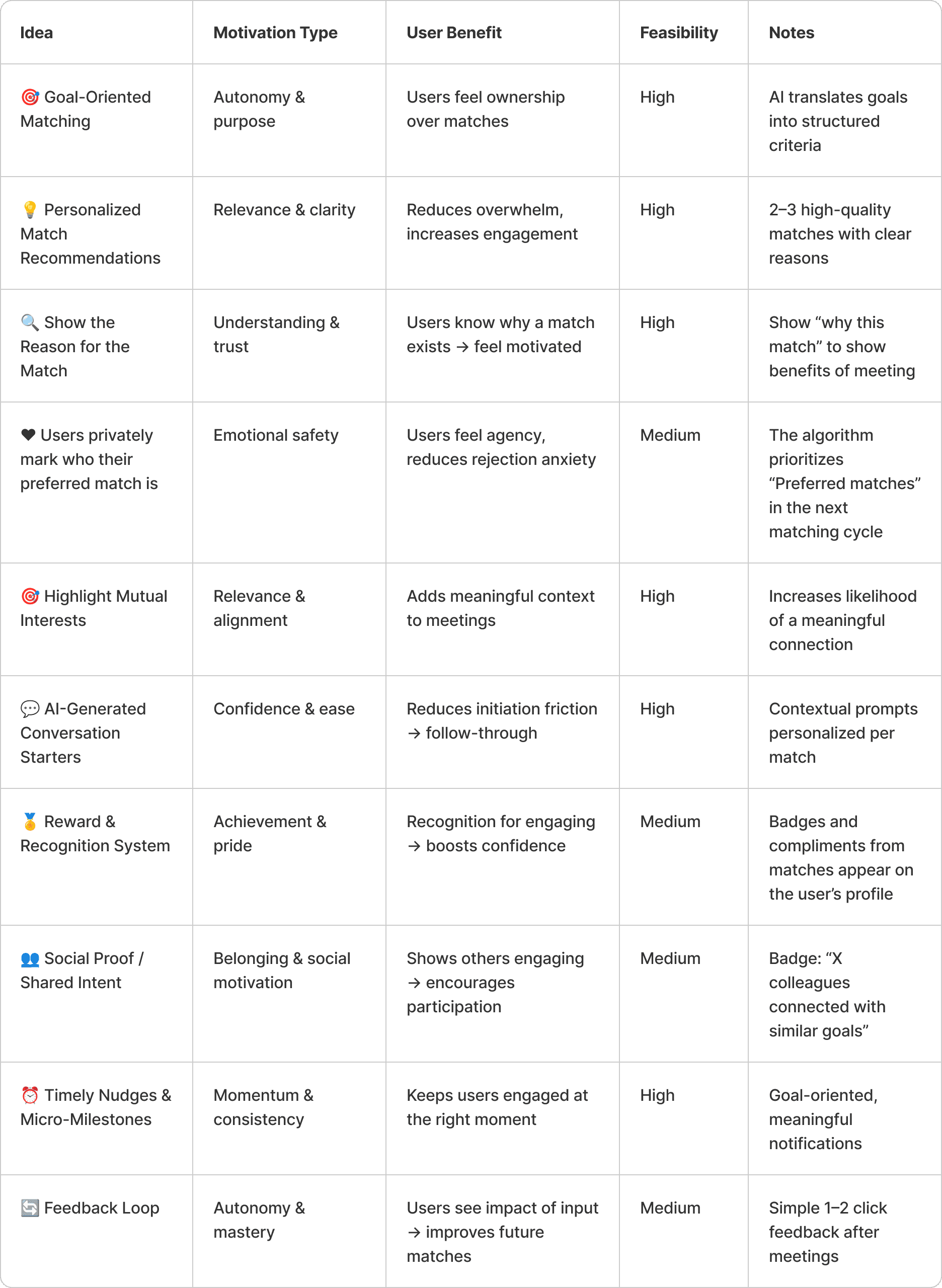
How might we create intrinsically motivating matches for employees so that they feel compelled to engage and follow through?
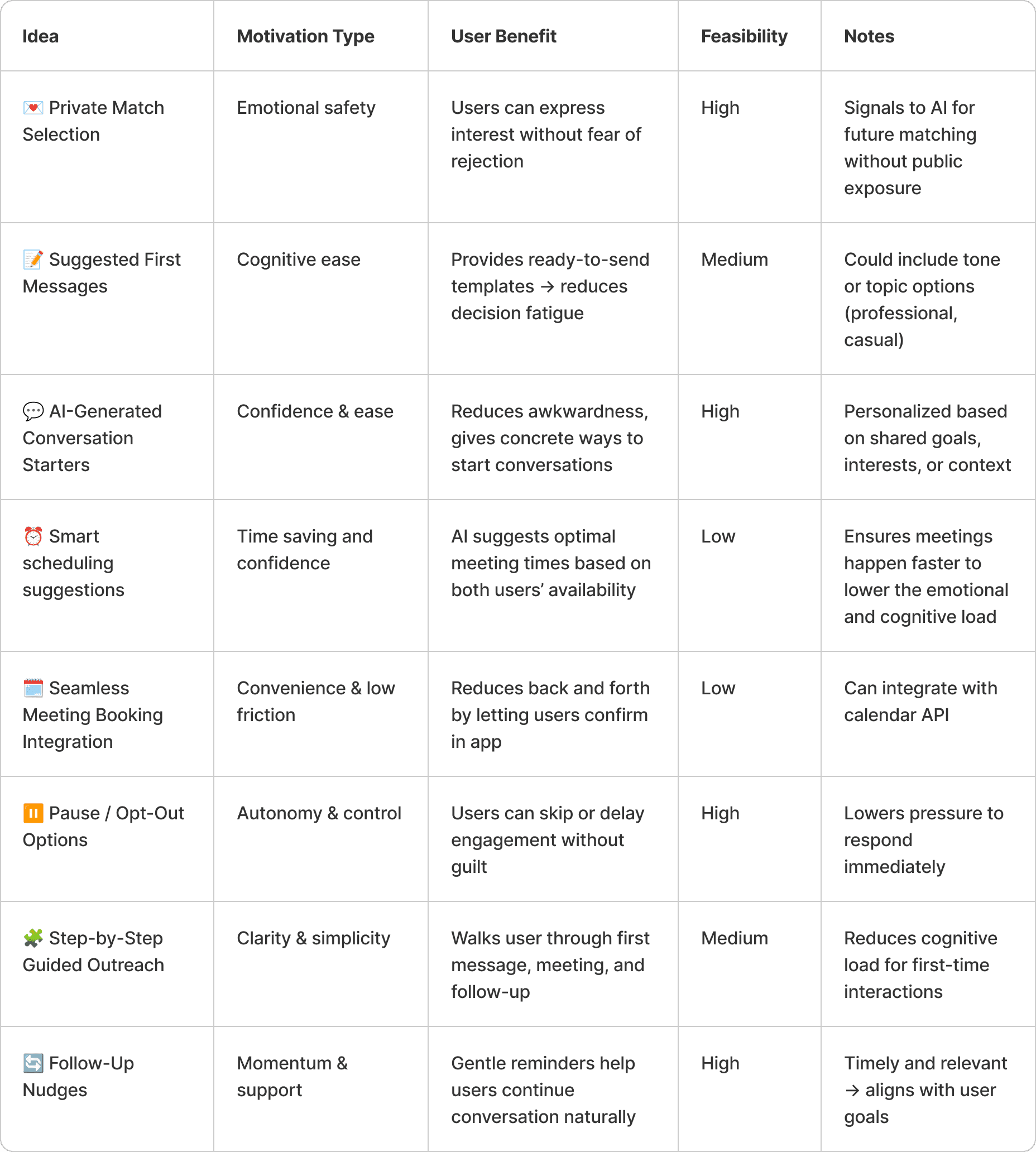
How might we reduce the emotional effort of initiating contact for employees so that they feel confident engaging with their matches?
Usability testing
I tested the designs early and often with real users, including those who were dedicated superusers and those who had disengaged from the tool to get different perspectives.
Before
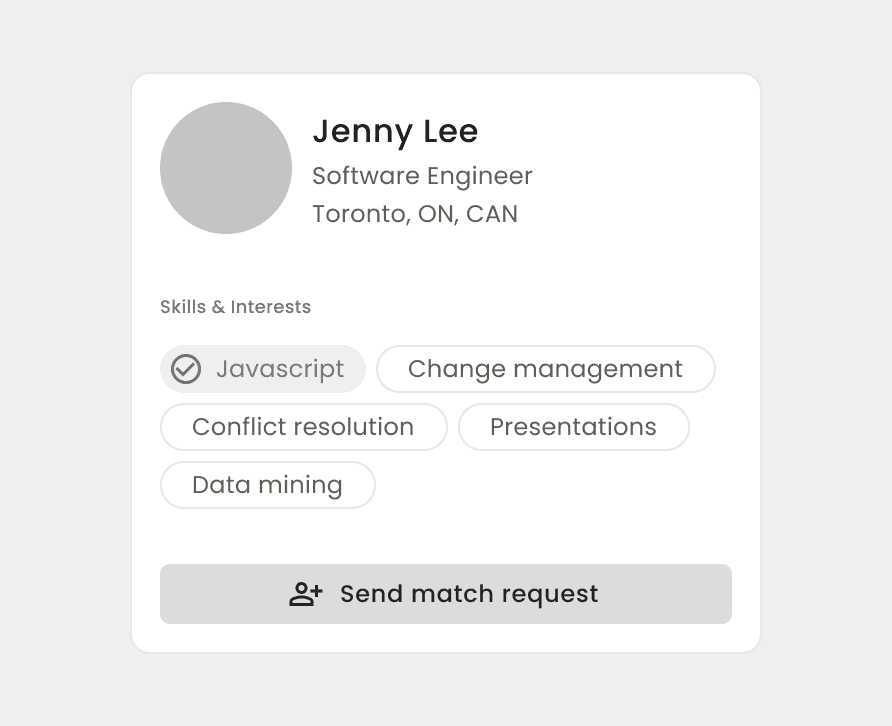
If a user wanted to network with someone, they needed to send them a "Match Request.” Users found the language intimidating, causing rejection anxiety.
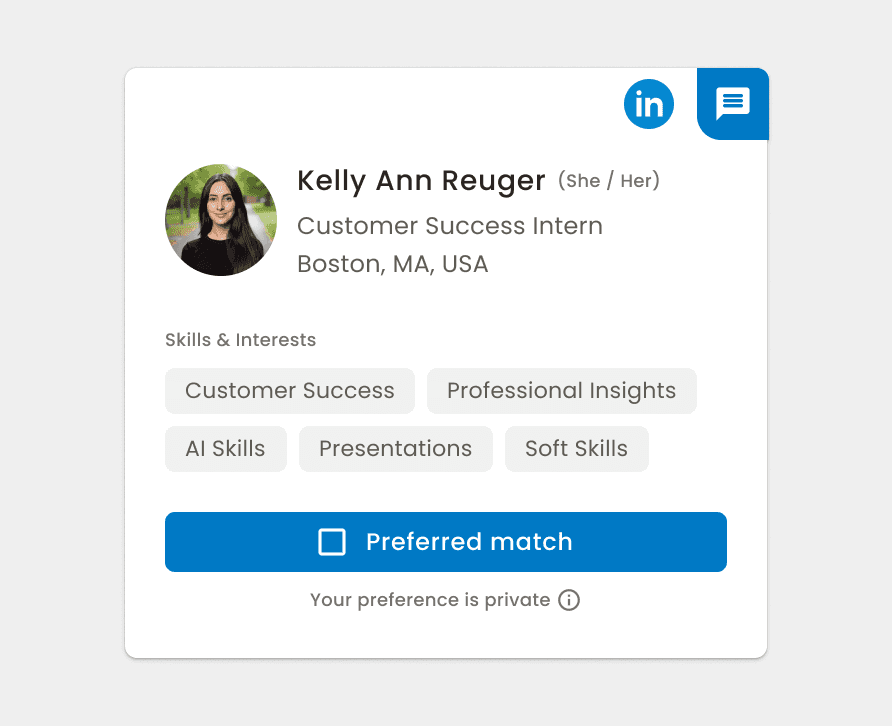
After
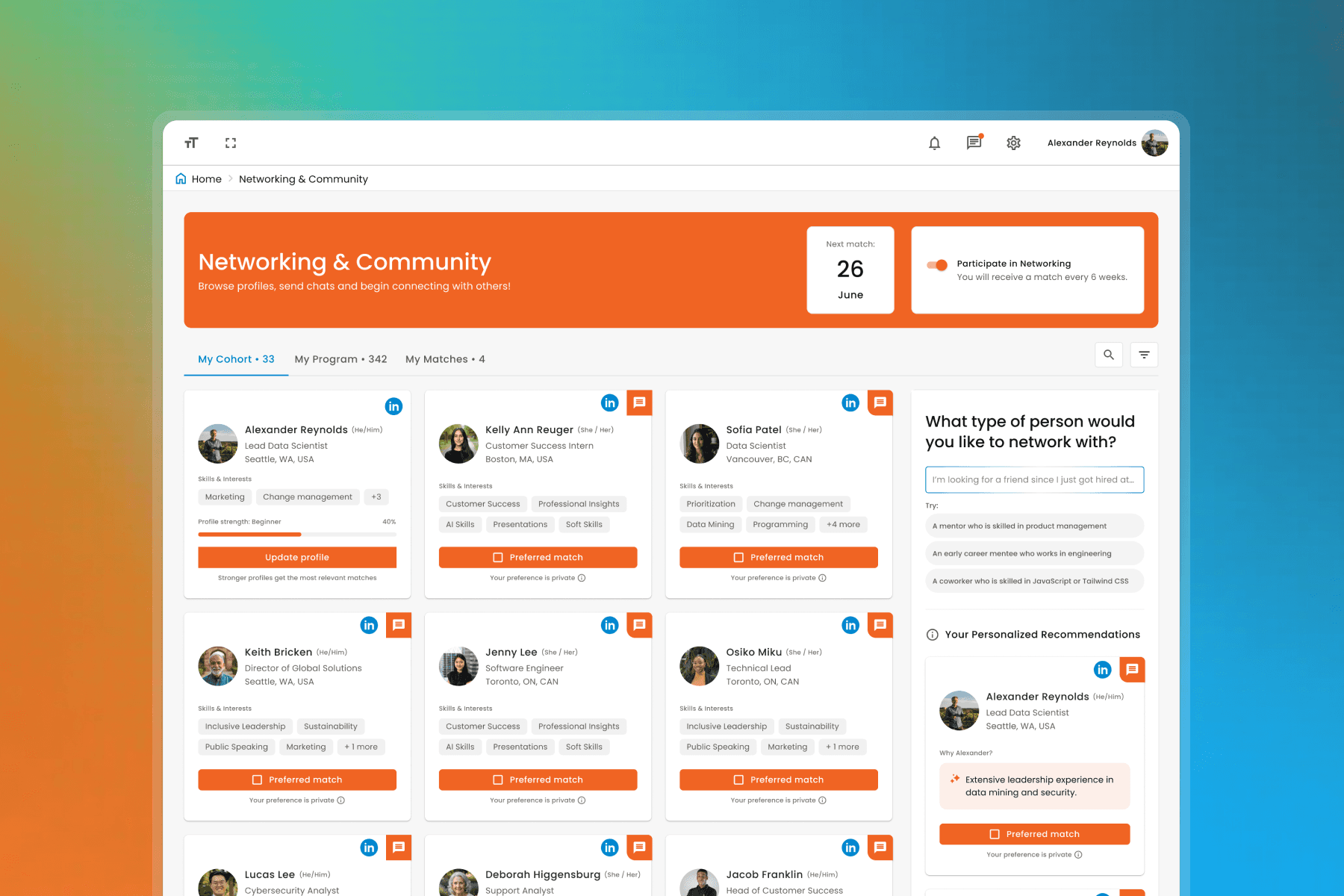
Users could privately express interest in meeting with someone by marking them as a “Preferred match,” signalling the algorithm to match them together when the next set of matches was released.
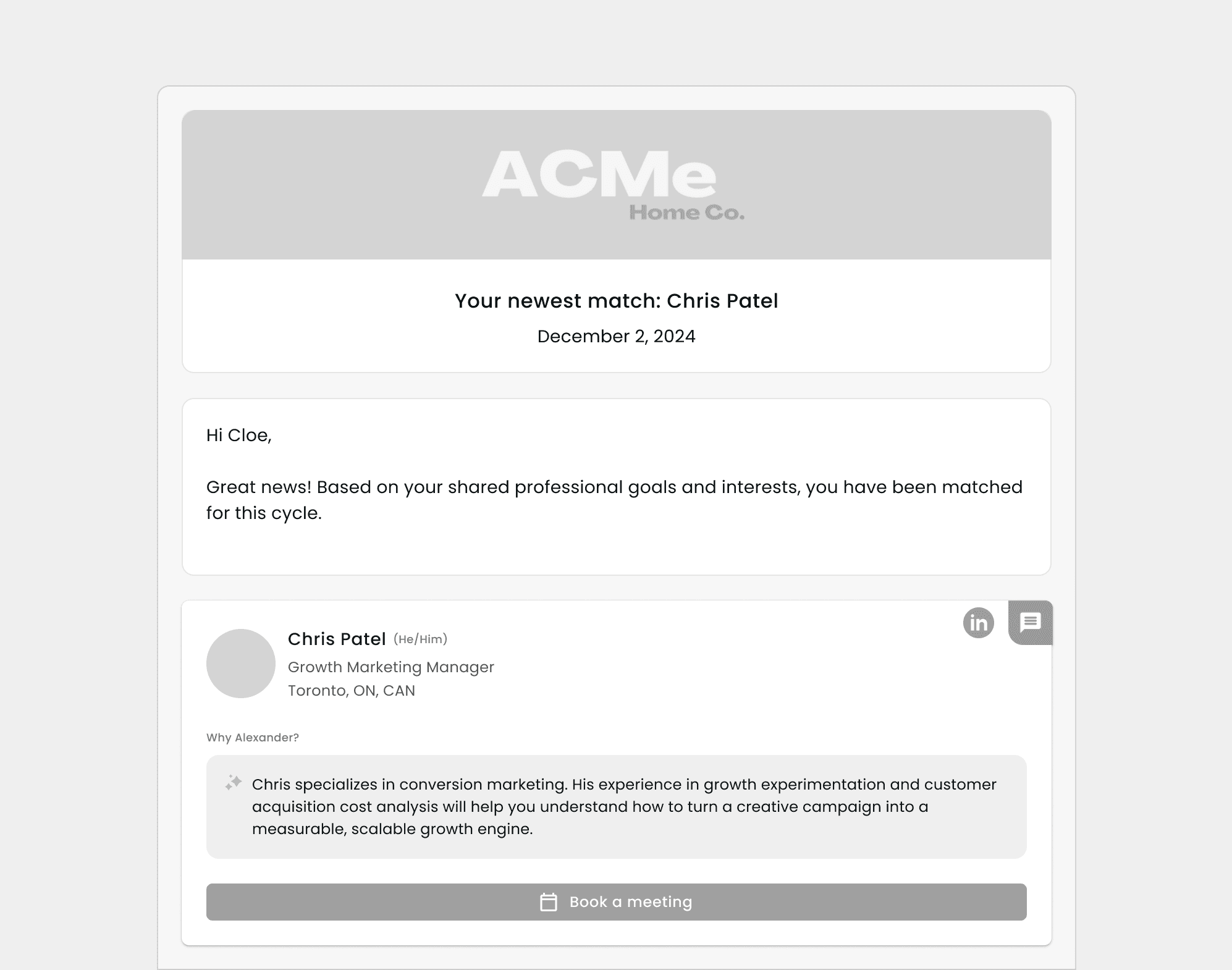
Before
When people were matched together, the main CTA button on the email was "Book a meeting." Users felt awkward about booking time in someone's calendar without chatting with them first.
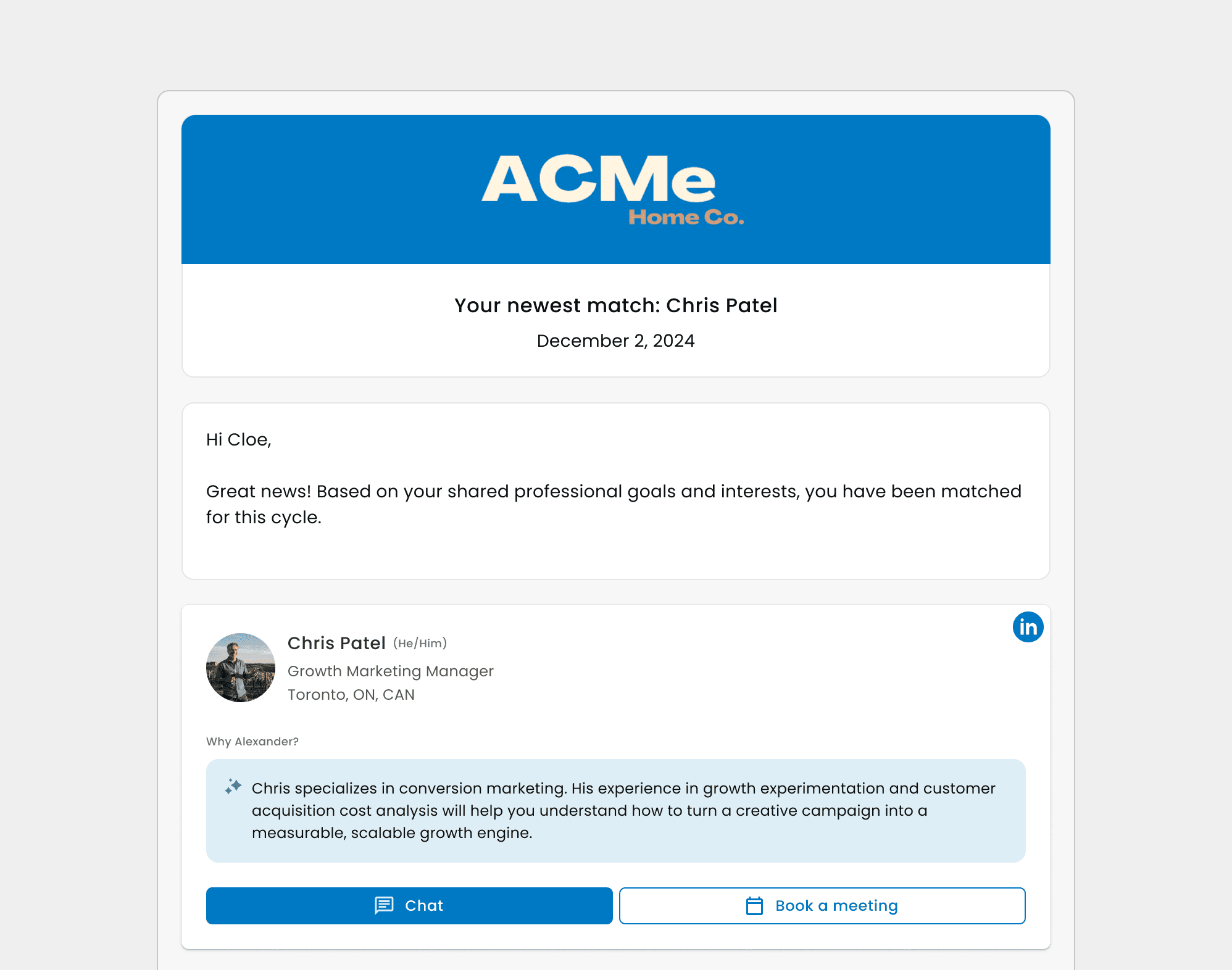
After
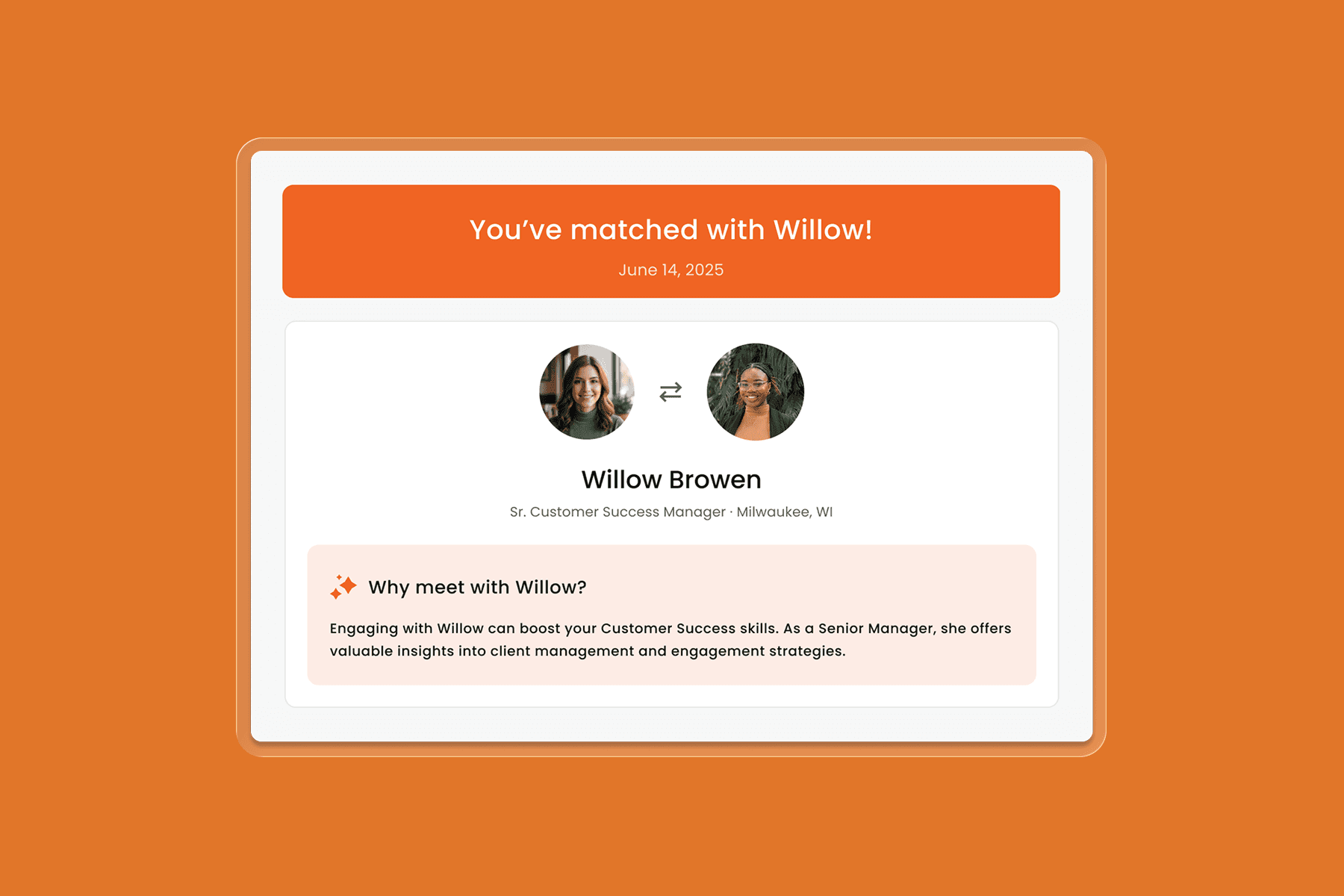
We reduced perceived social risk by shifting from commitment ("Book a meeting" CTA) to a low-pressure interaction ("Chat" CTA).
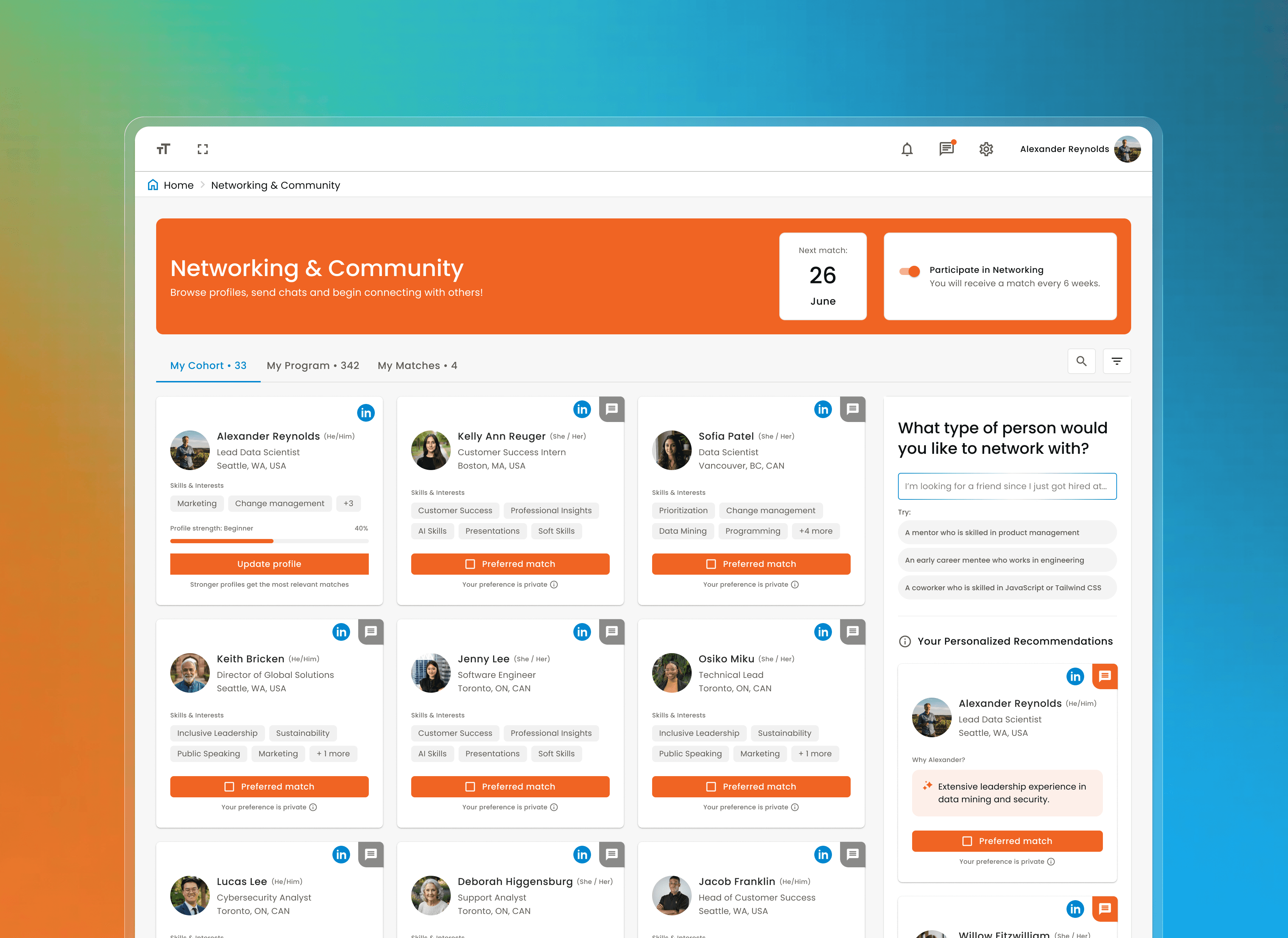
Original issue: Non-relevant matches
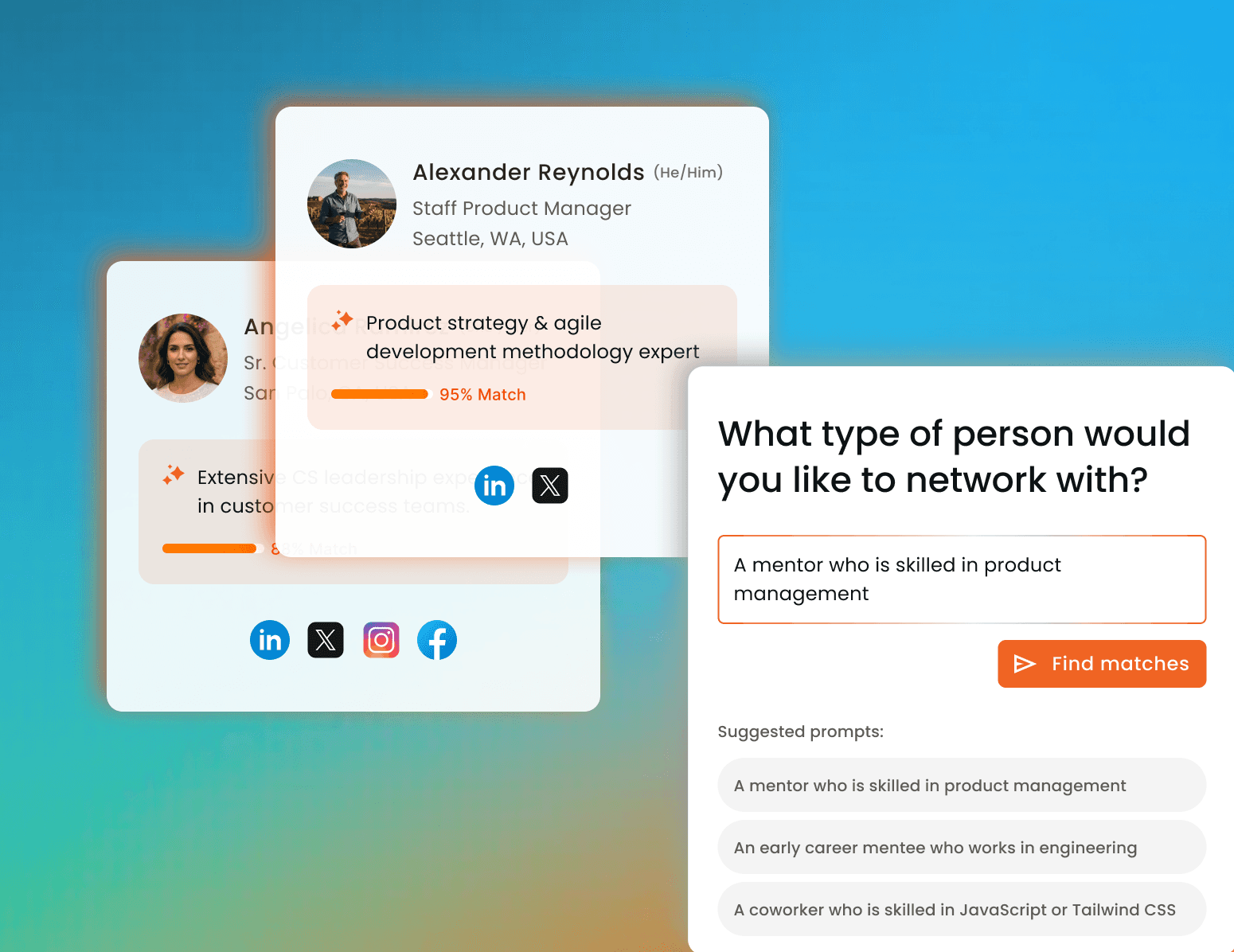
Instead of being matched automatically with no say, users are put in the driver's seat. They can easily browse and find networking connections based on their own goals, motivations and timelines.
Original issue: Non-relevant matches
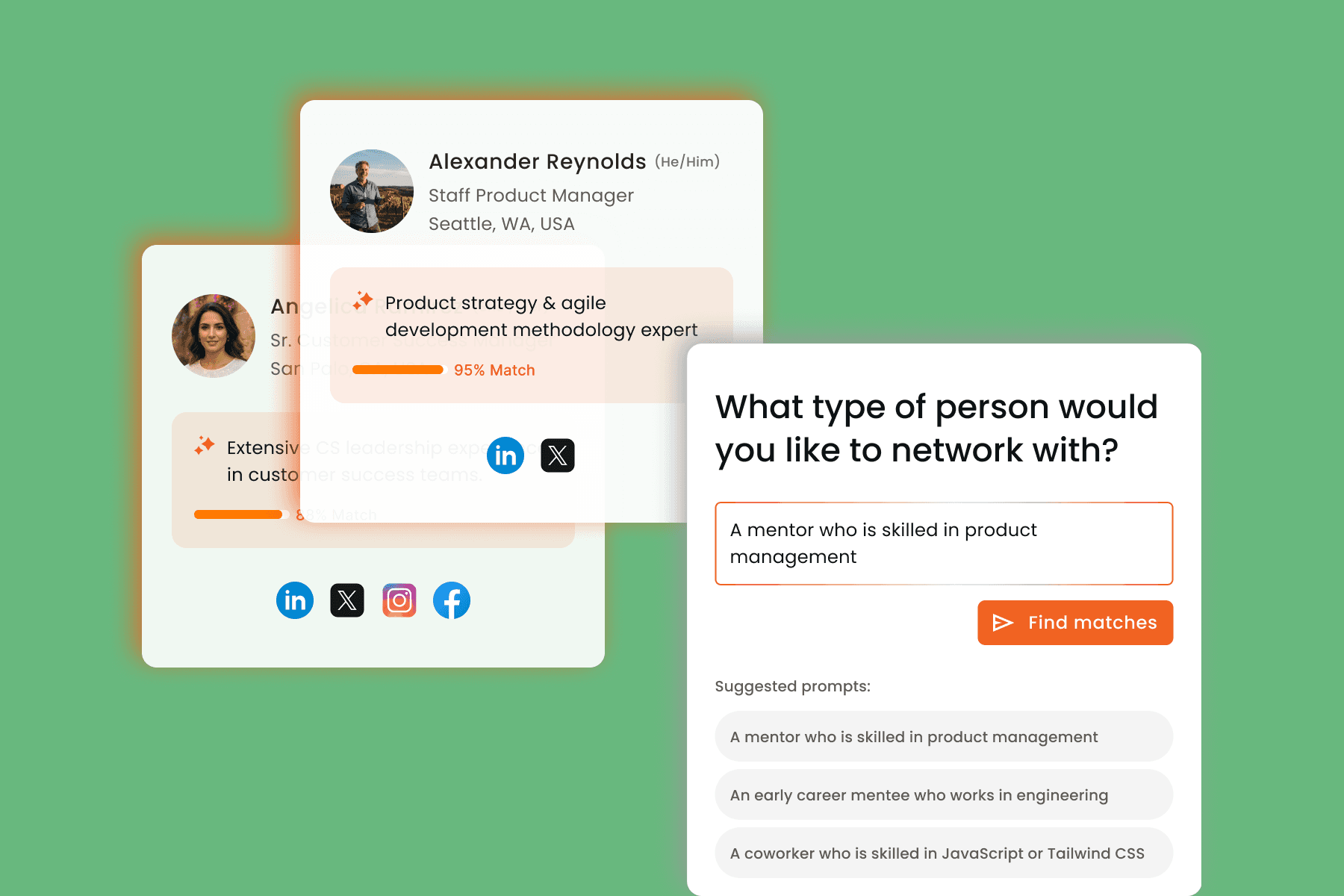
Users describe what they are looking for in natural language, and AI translates this intent into structured matching signals that directly influence their recommendations. This allows matches to reflect real, evolving goals rather than static profile data, giving users ownership over outcomes while increasing relevance without increasing match volume.
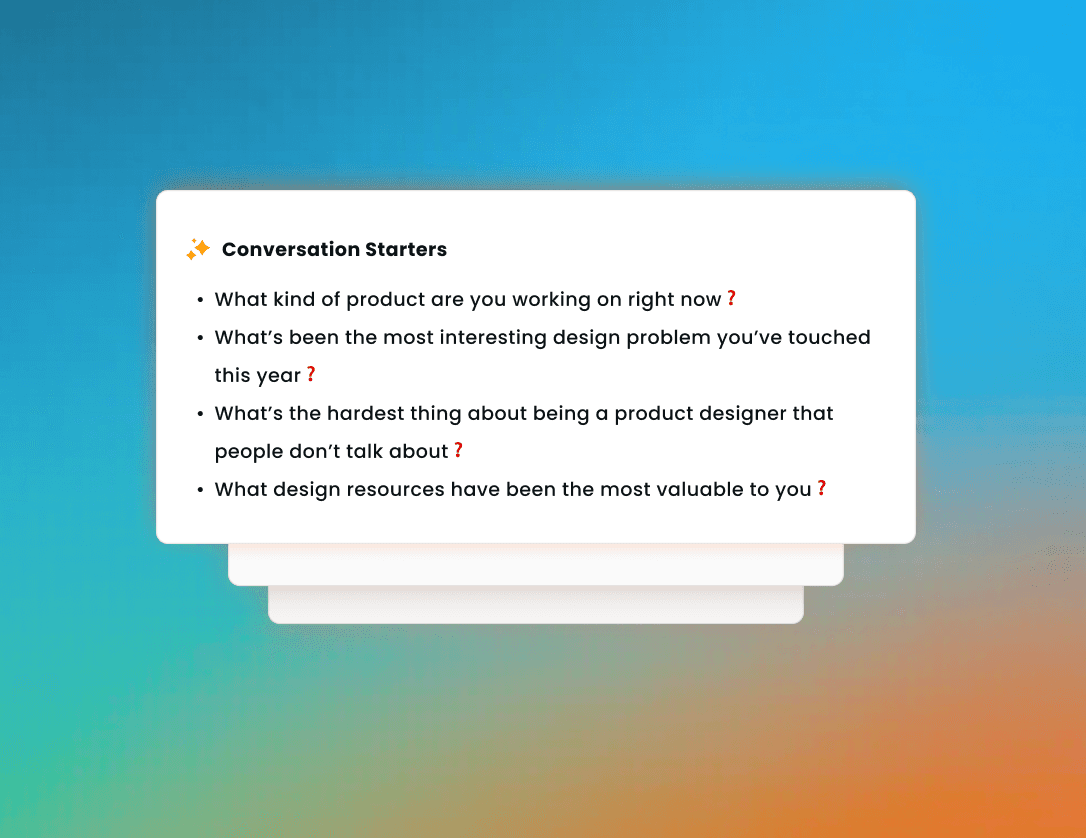
Original issue: Awkward conversations
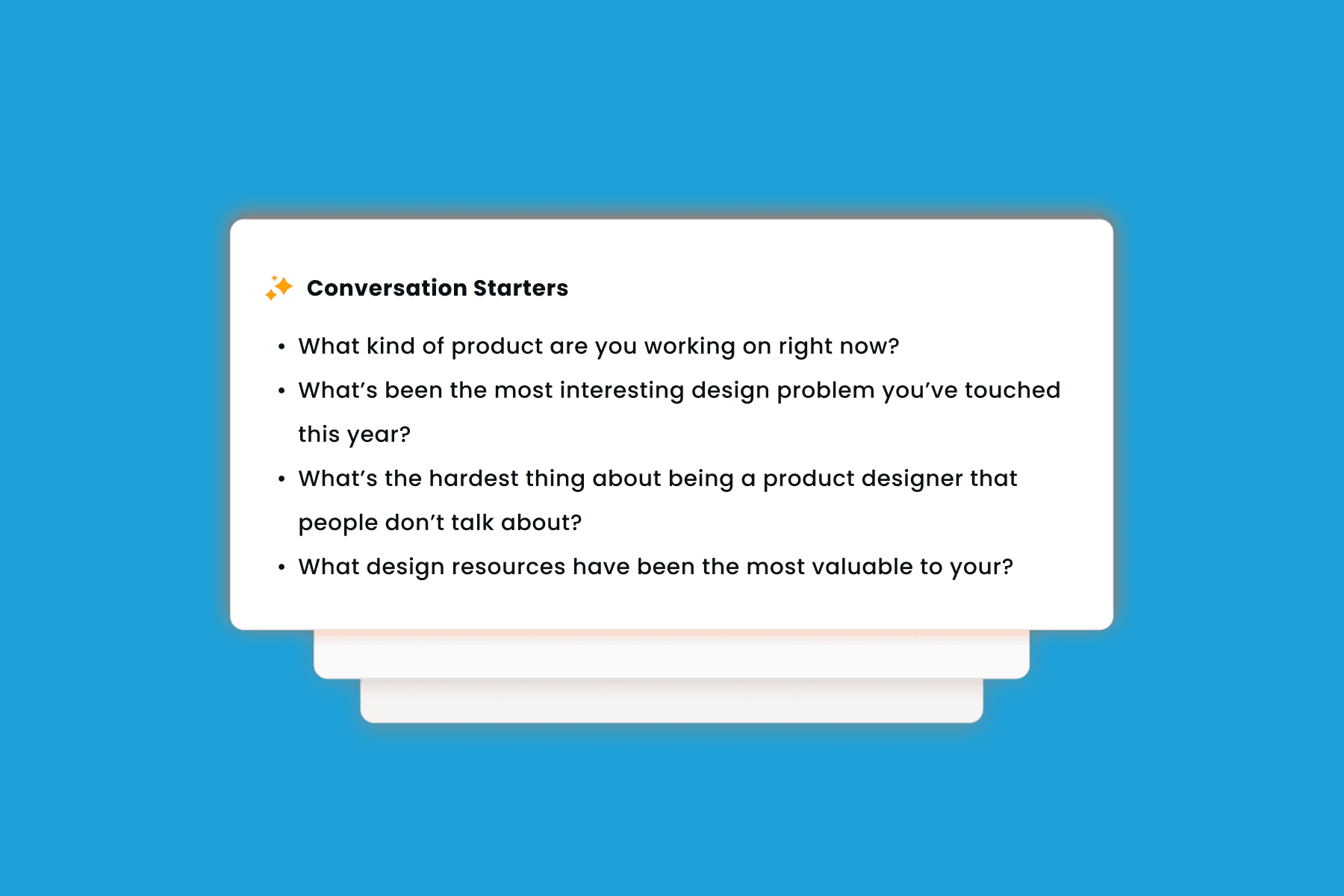
AI generates personalized conversation starters using shared context, goals, and profile data. By reducing the emotional effort required to initiate contact, users are more likely to reach out with confidence and follow through on meaningful conversations.
Original issue: Dwindling engagement
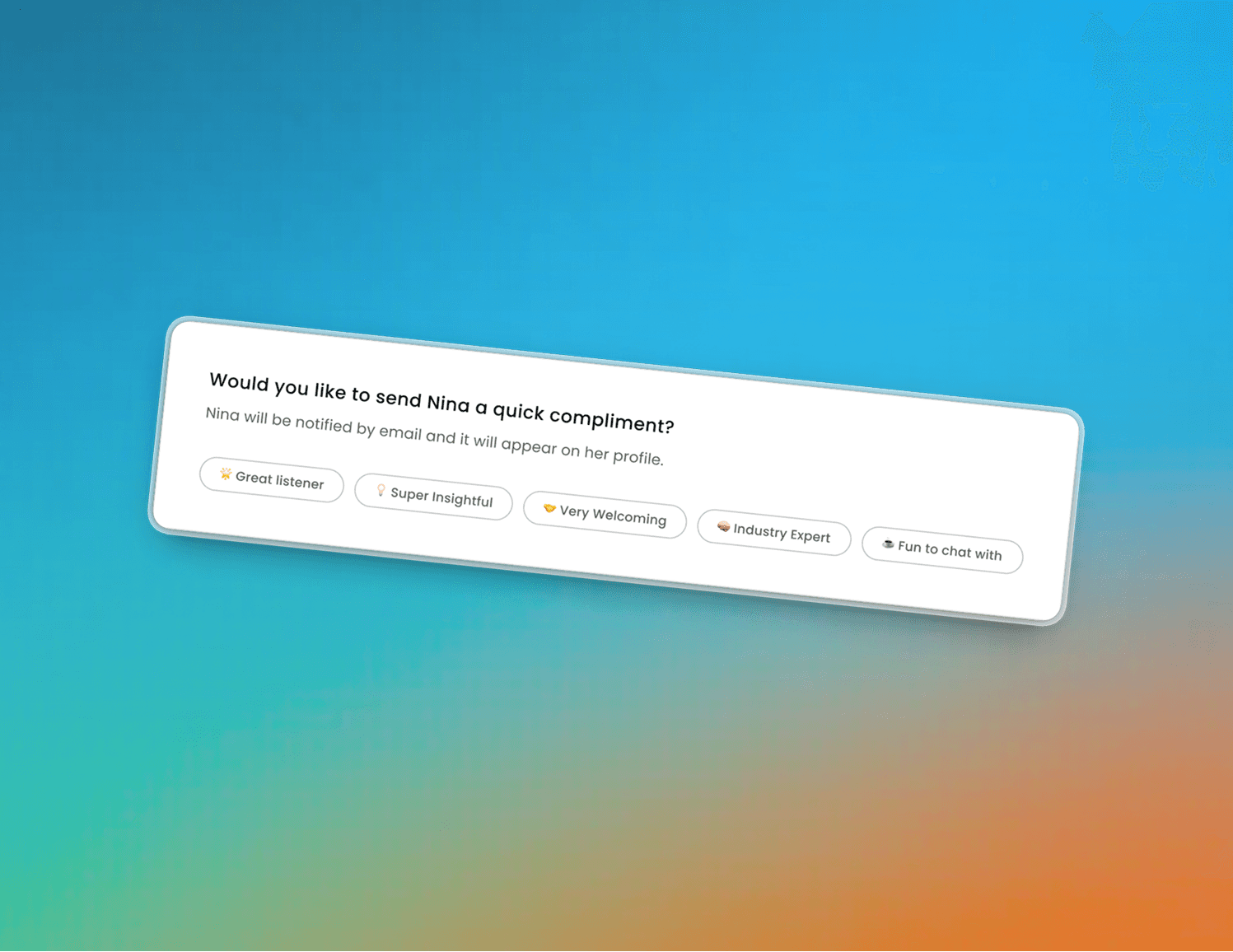
Users can send pre-written, one-click compliments that acknowledge effort, insight, or shared interests. These lightweight moments of positive reinforcement sustain momentum, encourage reciprocity, and keep interactions active between meetings.
Original issue: Over customization
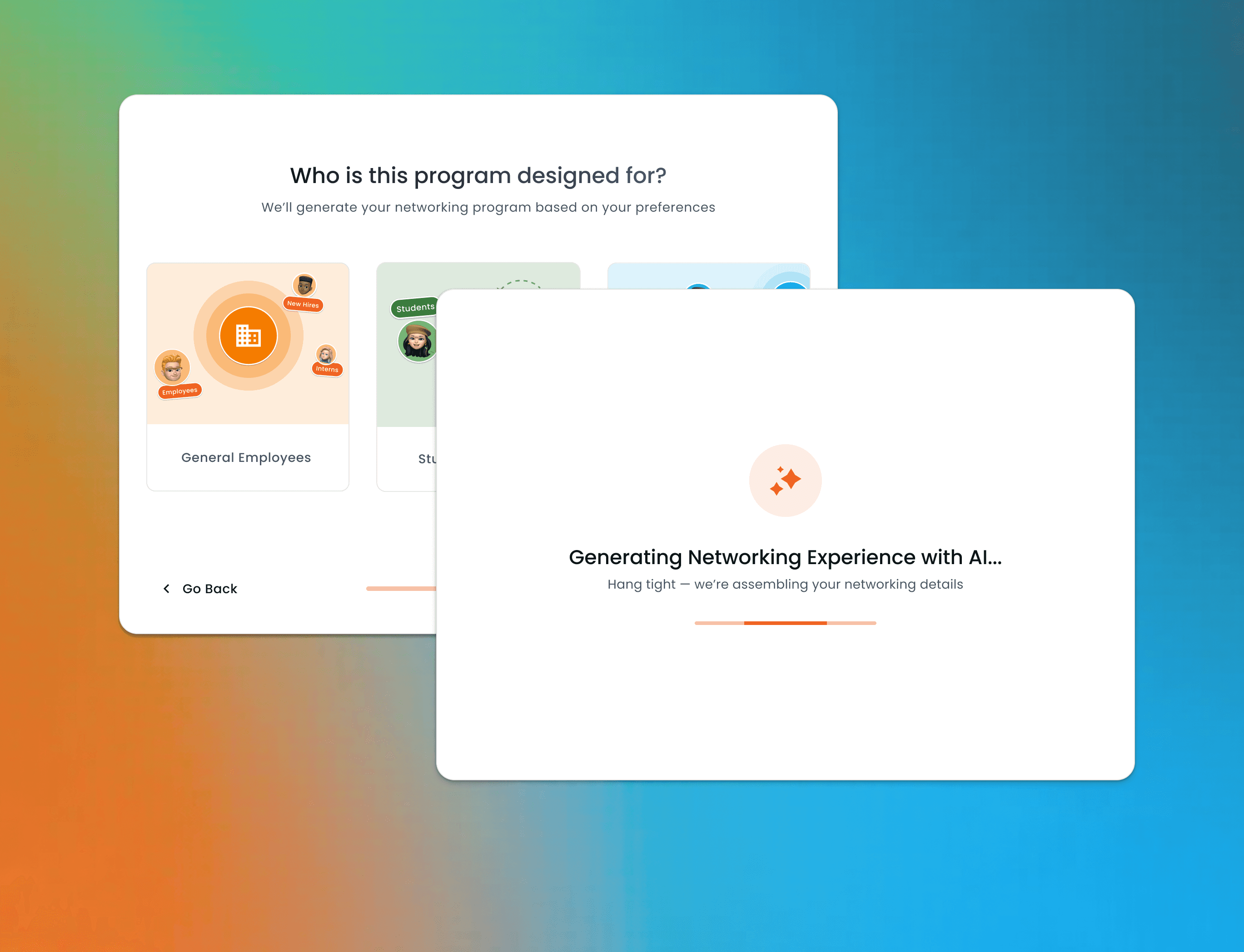
We simplified the admin workflow from 15+ options to 3 key inputs, letting AI generate programs using proven best practices for high engagement. Light friction prevents configurations that conflict with these best practices while keeping admins in control.
Reflections
The Biggest Challenges
Managing bias in AI-driven matching required thoughtful intervention
CHALLENGE
Using AI to improve match relevance introduced the risk of algorithmic bias, including over-indexing on similarity, profile verbosity, or existing power dynamics.
DECISION
We constrained AI inputs, avoided bias-amplifying signals, and kept humans in the loop by letting users choose between recommended matches. We monitored outcomes through surveys and match distribution analytics to validate fairness over time.
Removing customization in the setup flow was controversial
CHALLENGE
Power admins were accustomed to controlling every setting and initially resisted opinionated defaults.
DECISION
We used data to show that preset configurations led to stronger engagement and satisfaction. We preserved limited flexibility but added intentional friction to protect proven best practices and user outcomes.
Key Learnings
Designing for emotion drives outcomes
Reducing anxiety and uncertainty had a greater impact on engagement than improving algorithms.
Navigating the "migration mindset"
Users often cling to "bloated" features simply because they are familiar. Change is easier to sell when the "New" is demonstrably more effective than the "Old."